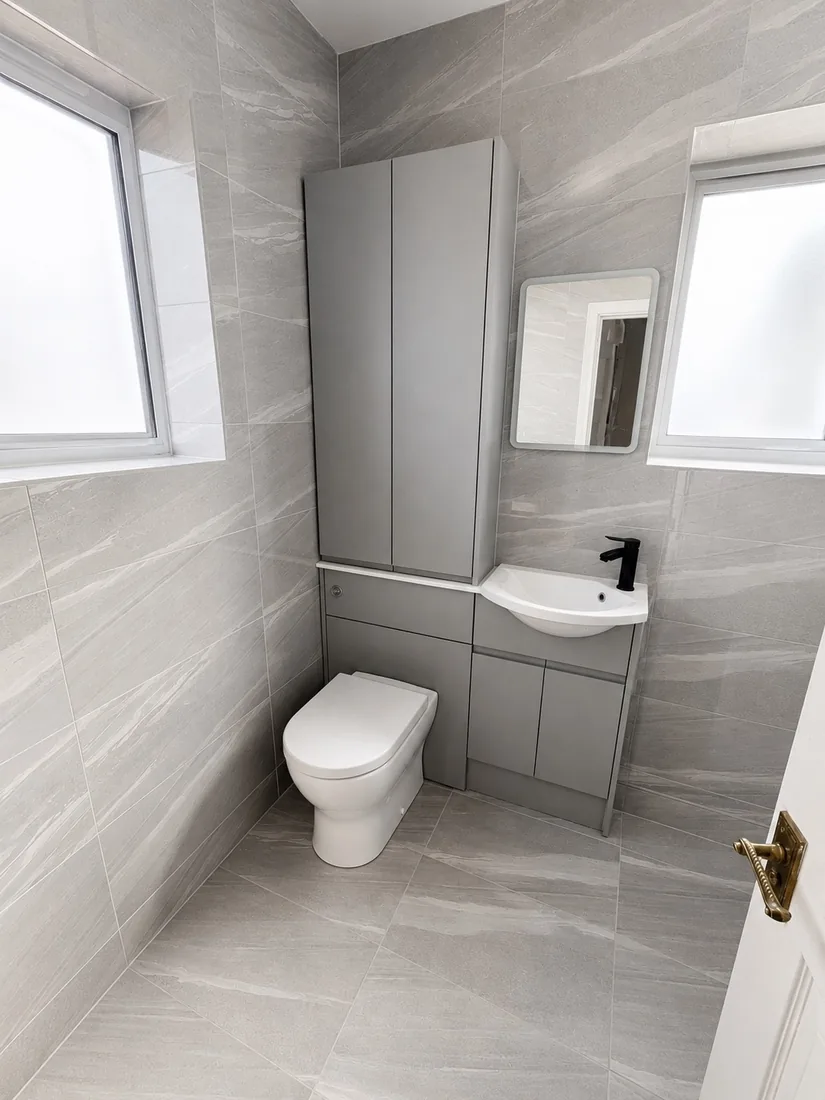
Wet room
Fully tanked floor and walls, sloped to a drain. No tray, often no screen — the whole room is the shower.
Both lose the bath, both feel open and modern — but a wet room and a walk-in shower are built very differently, and the right one depends on your room, your budget and who uses it. Here is an honest comparison to help you choose.
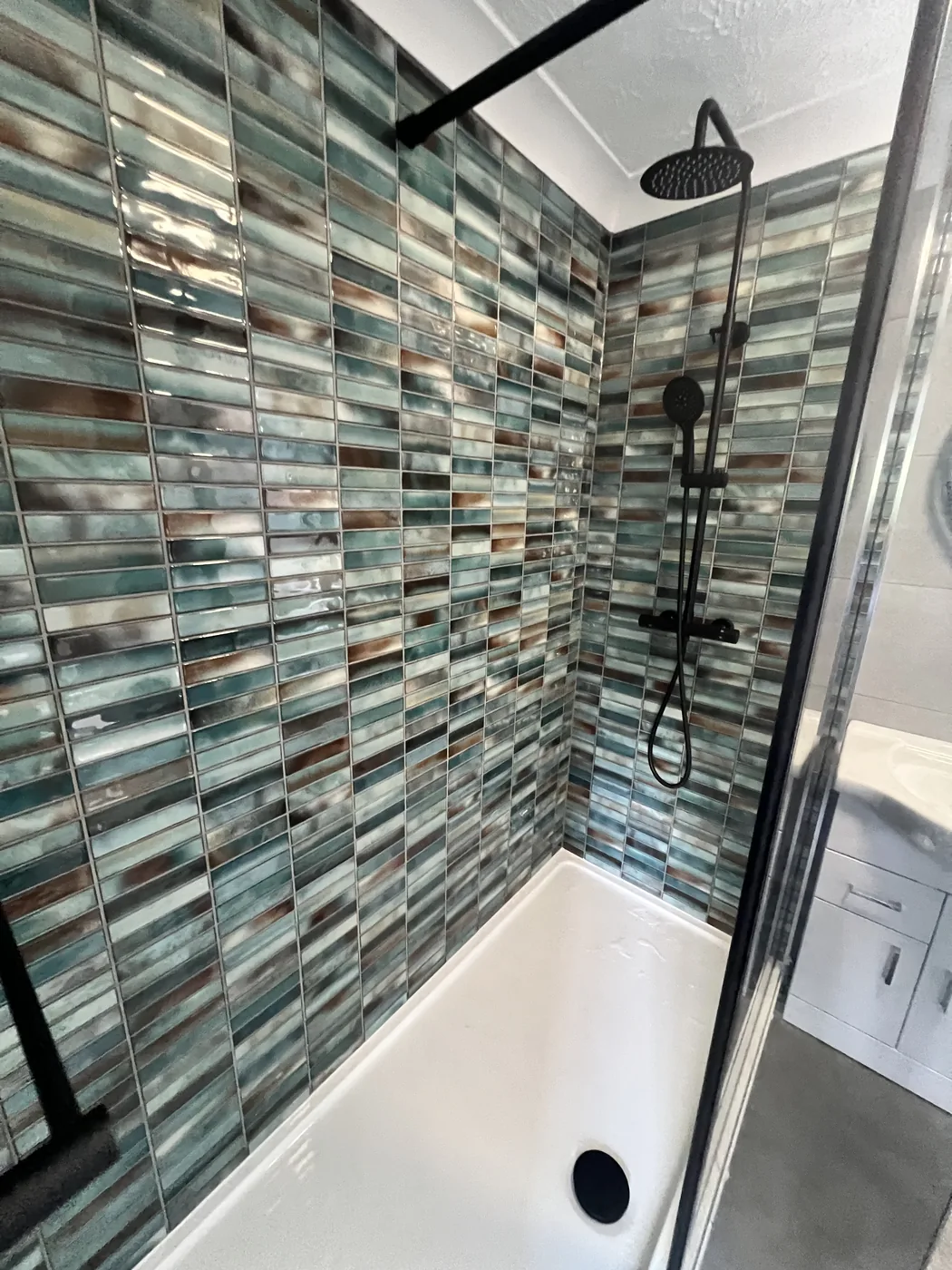
Ask for an open, modern shower and you will land on one of two options. A wet room treats the entire bathroom as a single waterproof space: the whole floor is tanked and gently sloped so water runs to a drain, usually with no tray and often no enclosure at all. A walk-in shower is a defined showering zone inside an otherwise normal bathroom — built on a low-profile or level-access tray, screened by a fixed pane of glass, and with no door to clean around.
They look similar in a brochure, but they behave differently the moment water hits the floor. A wet room contains nothing — the room is the wet zone, so the waterproofing has to be flawless across every surface. A walk-in keeps the water on the tray, so the rest of the room stays dry like a conventional bathroom. That single distinction drives almost every decision below: cost, suitability for small rooms, upkeep, drainage and accessibility.
Fully tanked floor and walls, sloped to a drain. No tray, often no screen — the whole room is the shower.
A tray-based showering area with a fixed glass screen and no door. The wet zone stays on the tray.
How much of the room is waterproofed — and therefore how the build, cost and upkeep play out over time.
Neither option is universally better — each wins in different rooms. The table below sets out the honest trade-offs across the things that actually matter day to day, before we get into which suits which kind of home.
| Factor | Wet room | Walk-in shower |
|---|---|---|
| Waterproofing | Whole floor and lower walls tanked — more involved, less margin for error | Mostly contained to the tray and shower walls — simpler, well-proven |
| Small rooms | Excellent — no tray or screen frees space and feels open | Good — but the tray and screen take a defined footprint |
| Accessibility | Best for level-access; truly zero-threshold | Good with a level-access tray; usually a small upstand |
| Upkeep | Open and easy to wipe; more tiled grout to keep sealed | Less open floor to dry; tray and screen edges to clean |
| Floor build-up | Needs falls formed into the floor — may raise the level | Tray sits on the existing floor; minimal structural change |
| Typical cost | Often higher — the tanking and falls take more labour | Often lower — a proven, repeatable build |
Cost figures vary widely with size, tiling, glazing and how much drainage work is involved, so treat any number you read online as an indicative UK range that depends on spec — we give a fixed written quote at survey rather than a guess up front.
Waterproofing, or tanking, is the single most important difference between the two. In a walk-in shower the wet zone is contained to the tray and the tiled walls around it, so the waterproofing job is well-defined and well-proven. In a wet room the entire floor is the shower, which means the floor and lower walls must be fully sealed before a single tile goes down — a liquid or bonded sheet membrane over a sloped substrate, with reinforcing tape worked into every corner, junction and around the drain.
Get the tanking right and a wet room will perform faultlessly for decades. Get it wrong and water finds its way into joists, ceilings and the rooms below — an expensive failure that hides until it is serious. This is exactly why a wet room is not a DIY project and why the membrane, not the tiling, is where the real craft sits. You can read more on how we approach both in our guide to wet rooms and walk-in showers, and our tiling and stonework work picks up where the tanking leaves off.
A wet room lives or dies on its tanking — the part you never see is the part we never rush.
For a compact bathroom or ensuite, a wet room is often the smartest use of space. Losing the tray and the screen removes visual clutter and the step over a lip, so a tight room reads as larger and more open. A walk-in shower still works well in a small room, but the tray and glass take a defined footprint — so the gain is real, just smaller.
The catch is what happens underfoot. A wet room needs falls formed into the floor so water runs to the drain, which can raise the finished floor level or require the substrate to be built up — straightforward on a timber floor, more involved on solid concrete. A walk-in tray usually sits on the existing floor with minimal structural change. Drainage also differs: wet rooms favour a discreet linear or centre gully sized for the flow, while a walk-in drains through the tray waste. None of this is a dealbreaker — it simply needs planning, which is why we cover it in our bathroom planning guide.
Day to day, an open wet room is easy to wipe down with no tray edges or door tracks to scrub, though there is more tiled floor and grout to keep sealed. A walk-in has less open floor to dry but its own edges and screen to clean. Neither is high-maintenance when built and sealed properly — the difference is one of habit more than effort.
For level-access and future-proofing, a wet room is hard to beat: a genuine zero-threshold floor with room for a seat, grab rails or a wheelchair. A walk-in can be made low-threshold with a level-access tray, which suits many households, but a true wet room is the stronger choice where mobility is a real consideration now or later.
Both can lift a home, especially as a second bathroom or ensuite, because buyers read open showers as modern and low-maintenance. The value sits in the quality of the build, not the label — sound tanking and a clean finish add appeal; a leaky wet room is a liability. Many homes also benefit from keeping at least one bath for family buyers.
If you are weighing up timings as well as type, our guide on how long a bathroom takes sets realistic expectations, and you can picture the finished look first with our 3D concept generator.
A wet room is a fully tanked, open bathroom where the whole floor is waterproofed and gently sloped to a drain — there is no tray and often no enclosure, so water runs straight to the gully. A walk-in shower is a defined showering area within an ordinary bathroom, usually built on a low-profile or level-access tray with a fixed glass screen and no door. The walk-in keeps the wet zone contained to the tray; the wet room treats the entire room as the wet zone.
It can be one of the best uses of a small room. Removing the tray and screen frees up floor space and makes a compact bathroom or ensuite feel larger and more open, with no lip to step over. The trade-off is that the whole floor must be tanked and falls have to be set carefully so water reaches the drain and not the doorway. In a small space that detailing is critical — done well, a wet room often suits a tight footprint better than a tray would.
The floor and lower walls are tanked — sealed with a liquid waterproof membrane or a bonded sheet membrane over a sloped substrate, with reinforcing tape worked into every corner, junction and around the drain. The falls are formed so the floor drains to the gully, then tiling goes on top of the sealed layer. The tanking is the part you never see and the part that matters most; if it is rushed or skimped, water finds its way into the structure. It is not a job to cut corners on.
A wet room is usually the stronger choice for accessibility because it can be genuinely level-access — no tray lip, no step, and room for a seat, grab rails or even a wheelchair. A walk-in shower can be made low-threshold with a level-access tray, which suits many people, but a true zero-threshold wet room is hard to beat for future-proofing a home or supporting reduced mobility.
A well-built wet room or walk-in shower can add appeal, especially as a second bathroom or ensuite, because buyers read it as modern and low-maintenance. The value comes from the quality of the build — sound tanking, neat falls and a clean finish — not the label. A poorly waterproofed wet room is a liability, so the safest way to protect value is a proper installation. Many homes also benefit from keeping at least one bath for family buyers.
We open for bookings in June 2027 — join the 2027 priority list now, and founding clients get first pick of the calendar.