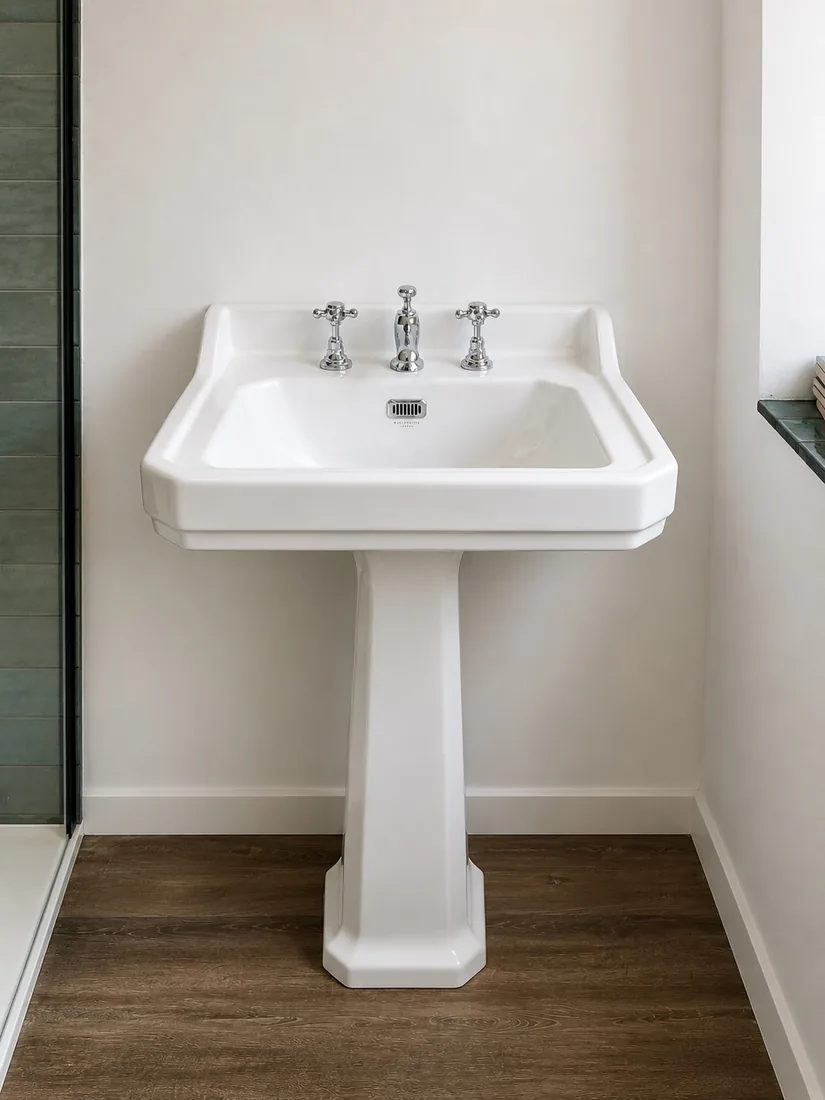
Centred & balanced
Layouts worked out so full tiles sit where they matter and cuts fall evenly into corners.
Tiling is where a bathroom is made or lost. We treat it as a finishing craft — careful setting-out, the right material for the room, and details that read as deliberate from every angle.
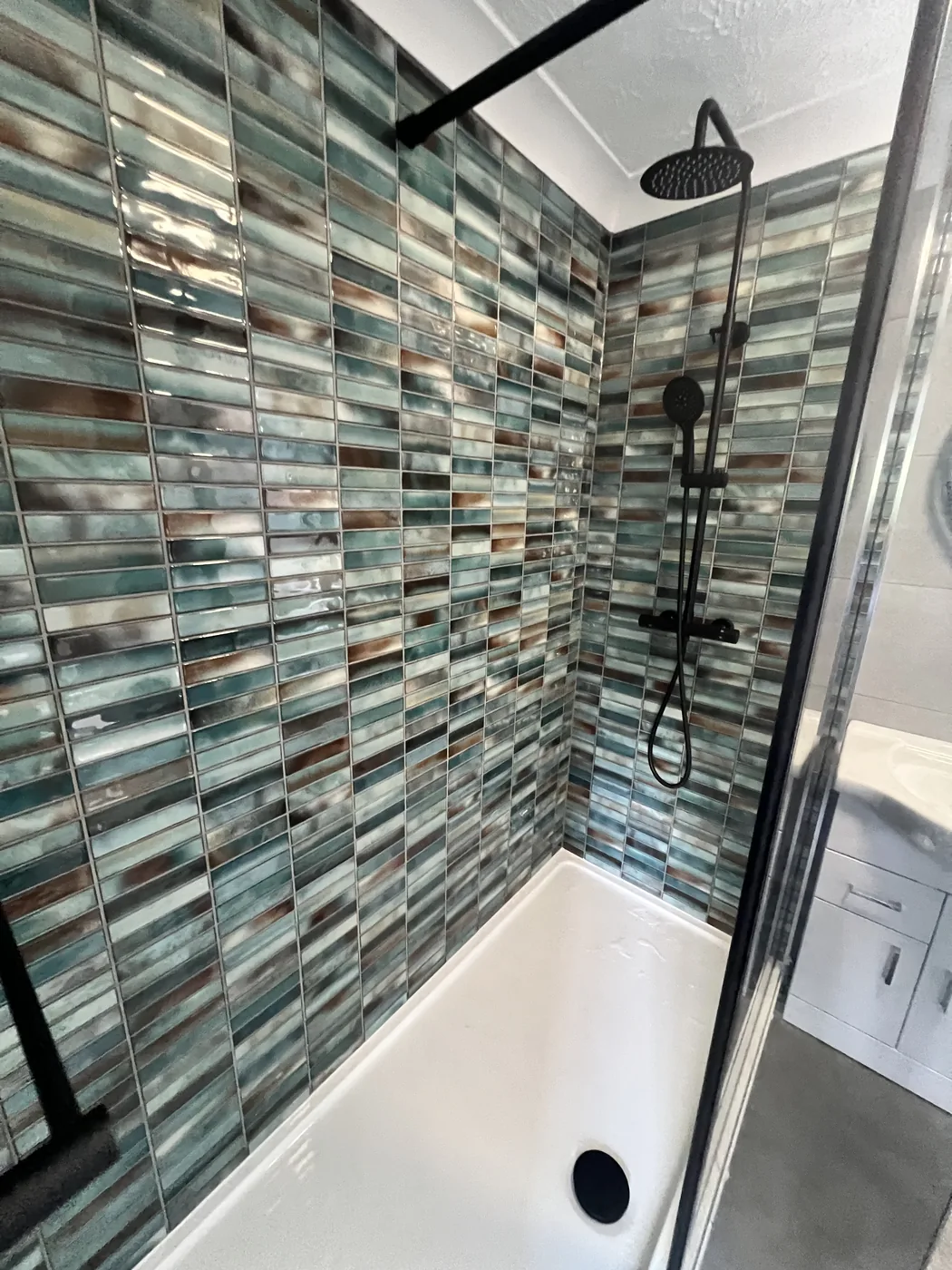
You can fit a beautiful suite and still end up with a bathroom that feels off — and nine times out of ten the reason is the tiling. Tiles cover the largest surfaces in the room, so every decision about layout, material and finish is on permanent display. Done well, the work disappears and the room simply looks right. Done carelessly, the eye catches every misaligned joint and lippy edge.
Barrington Interiors approaches tiling and stonework as a discipline in its own right — the skilled finishing layer that sits over everything else. Where our wet rooms and walk-in showers work is about the waterproofing beneath the tile, this is about what you actually see and touch: the planning, the cuts, the alignment and the finish. It is the most craftsman part of what we do, and we plan it with the same care we bring to a full bathroom installation.
The single biggest difference between a premium tiling job and an average one happens before a single tile is fixed. Setting out means planning the whole layout in advance — where the centre line falls, how the courses run across each wall, and where the cut tiles end up. The aim is simple: full tiles in the places the eye lands, balanced cuts tucked into corners and edges, and grout lines that carry cleanly from one surface to the next.
A wall tiled without setting out will often leave a sliver of tile in one corner and a full tile in the other, or a course that dies awkwardly at a window reveal. We dry-lay, measure twice, and account for the fact that bathrooms are rarely truly square. If you are planning the room yourself, our 3D concept generator helps you picture the space before we set it out for real.
Layouts worked out so full tiles sit where they matter and cuts fall evenly into corners.
We allow for out-of-square walls and floors rather than assuming everything is straight.
Grout lines aligned across walls, floor and into reveals so the whole room reads as one piece.
Tiling is a finishing craft, not an afterthought — the setting out is decided before the first tile is cut.
Tile choice is as much practical as aesthetic, and the trade-offs matter in a bathroom. We will talk you through what suits your room, your budget and how much upkeep you want to take on.
Dense, low-porosity and hard-wearing — porcelain is the dependable all-rounder for bathroom walls and floors. It resists water and staining, needs no sealing, and now comes in convincing stone, marble and concrete effects. For most bathrooms it is the sensible choice, and it carries large formats well.
Marble, limestone, travertine and slate bring a depth and character no print can quite match — every tile is unique. The trade-off is that stone is porous, softer than porcelain and needs sealing and a little ongoing care. Chosen and maintained well, it is a genuinely premium finish; chosen carelessly for a busy family bathroom, it can be high-maintenance.
Big-format porcelain and stone slabs cut down on grout lines dramatically, giving a calm, seamless look that suits modern bathrooms beautifully. They are heavier and far less forgiving to handle and fix — which is exactly why they reward an experienced fitter.
Large-format and book-matched stonework is where setting-out and handling skill really earn their keep. The tiles are big, heavy and easily cracked, the substrate has to be dead flat, and the only way to keep those slim, even grout lines is meticulous levelling — checking each tile against its neighbours so there is no lippage to catch a hand or the light. Book-matched stone takes it further again, mirroring the veining across a panel so a wall reads as a single, deliberate surface.
The finishing details are what separate a job you stop noticing from one you can't stop noticing. We mitre external corners rather than relying on bulky trims wherever it suits the design, choose neat edge profiles and tile trims that match the tile, keep alignment honest across the junction of wall and floor, and grout and seal cleanly with the right product for the material. None of it shouts — that is the point. It is the quiet, considered finish behind our promise to fit cleanly and finish with care, whether for a compact ensuite or cloakroom or a full bathroom renovation.
We tile bathrooms throughout Worthing and the surrounding coast — including Shoreham-by-Sea, Lancing and across Adur, as well as Hove and Brighton. The local housing stock is varied — Victorian and Edwardian terraces with small, out-of-square rooms, mid-century semis, and coastal flats where humidity is a constant — and each calls for a different approach to material and setting-out. Whether you want to re-tile a single shower or specify a full natural-stone scheme, get in touch and we'll talk it through properly.
Porcelain is a dense, fired ceramic that is hard-wearing, water-resistant and needs no sealing — practical and low-maintenance for most bathrooms. Natural stone such as marble, limestone or travertine is quarried, so each tile is unique and full of character, but it is porous and softer, which means it needs sealing and a little ongoing care. Porcelain is the safer everyday choice; stone is the premium one if you're happy to maintain it.
Setting out is the planning done before any tile is fixed — deciding the centre line, how courses run across each wall, and where cut tiles fall. It's what makes a finished room look balanced rather than accidental, with full tiles where the eye lands and even cuts tucked into corners. Plenty of tilers skip it; doing it properly, allowing for walls that are never quite square, is exactly what separates a premium result from an average one.
Yes. Large-format porcelain and stone slabs give a calm look with very few grout lines, but they are heavy, brittle and unforgiving. They need a dead-flat substrate, careful handling and meticulous levelling to keep every tile flush with its neighbours and the grout lines slim and even. It's specialist work, which is why it benefits from an experienced fitter rather than being treated like standard tiling.
It does. Most natural stone is porous, so we seal it on installation and it will need re-sealing periodically. Acidic spills — and some everyday cleaning products — can etch or stain certain stones like marble and limestone, so they suit a considered bathroom better than a heavy-use family one. We'll match the stone to the room and explain exactly how to care for it so it keeps looking its best.
It comes down to setting-out, levelling and finishing. Aligned grout lines that carry across walls and floor, consistent spacing, and tiles fixed flush so there's no lippage all start with planning and a flat substrate. At the edges we mitre external corners or use neat, matched trims rather than bulky profiles, then grout and seal cleanly with the right product for the material. The details are deliberate, which is why they don't draw the eye.
Often, yes. We're happy to re-tile a single shower, splashback or floor, and we'll always be honest about how closely new tiles can be matched into existing work — exact matches can be tricky once a tile range is discontinued or the original has aged. We'll assess the area, explain the realistic options, and recommend the approach that will look right rather than patched.
We open for bookings in June 2027 — register your interest now, and founding clients get first pick of the calendar.