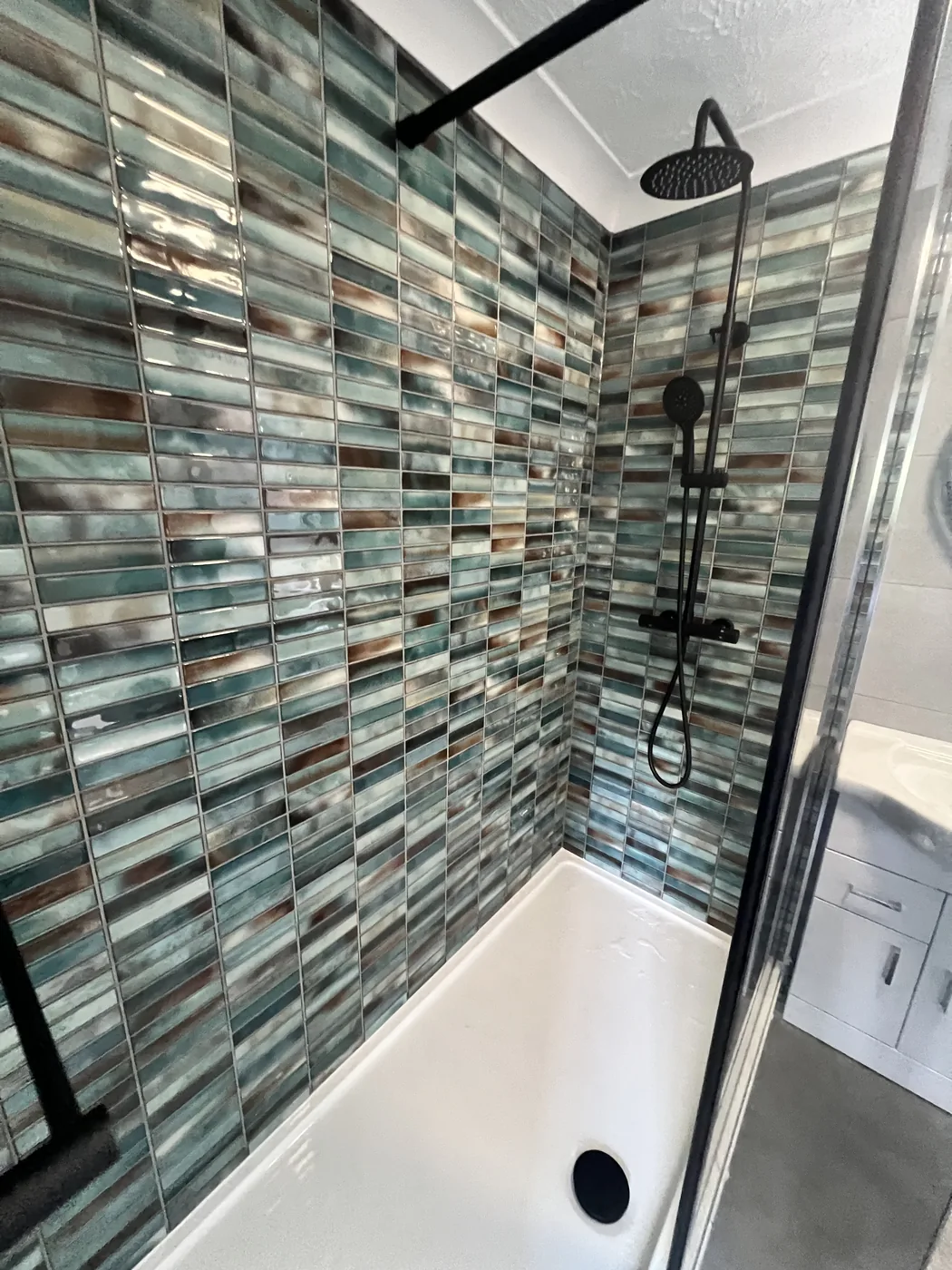
True wet room
Open, level, fully tanked floor with the whole space designed to drain — best on solid floors.
A wet room only works if the bit you can't see is right. We engineer the waterproofing, the falls and the drainage first — then make it beautiful — so it stays dry, level and reliable for the long term.
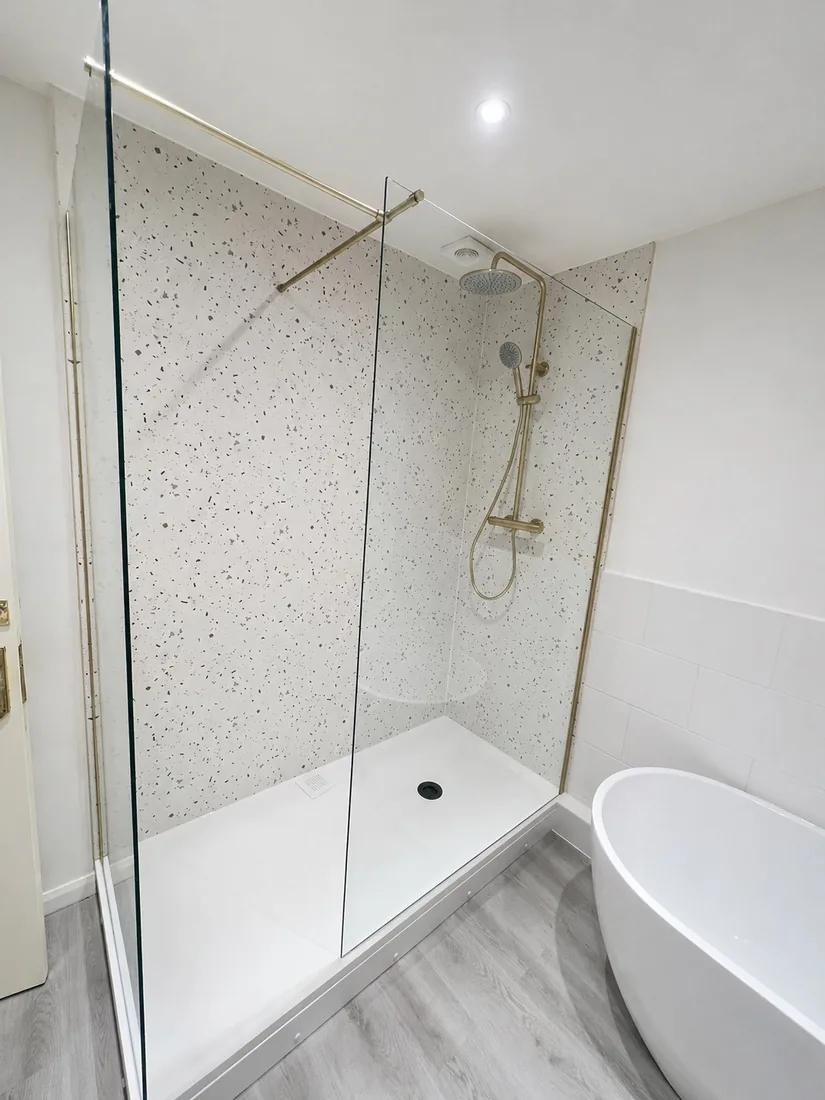
A wet room looks simple: an open showering space, no tray, no step, water running away to a tidy drain. That simplicity is exactly what makes it unforgiving. There is no tray and no enclosure to catch mistakes — the floor and walls themselves are the waterproofing. Get the hidden layers wrong and the first sign of trouble is a damp ceiling in the room below, or grout that never quite dries out.
This is the part we care about most. Tiling is the surface; a wet room is the structure beneath it. When we install one, the design conversation comes second. The first conversation is about tanking, gradient and where the water actually goes.
Every wet room we build starts with a fully tanked envelope — a continuous waterproof membrane bonded across the floor, up the walls to a sensible height, and lapped into the drain so there are no gaps at the joints, corners or pipe penetrations. On top of that sits the falls: the floor is graded with a deliberate, even slope so water is carried to the drain rather than pooling in a low spot. Too shallow and it sits; too steep and it feels wrong underfoot. The skill is getting a fall you can't see but that works every time.
Cheap installs cut corners here — a membrane that stops short of the splash zone, a fall formed by guesswork, a drain seal left to chance. We treat the waterproofing as a system that has to be right before a single tile goes down, which is the same discipline we bring to a full bathroom installation.
People use the terms interchangeably, but they are different jobs. A true wet room has an open, tanked, level floor with no tray and the whole space designed to get wet. A walk-in shower is usually a generous low-profile or flush tray with a fixed glass screen — open in feel, but the waterproofing is concentrated in the showering zone rather than across the entire room.
Which suits you depends as much on your floor structure as your taste. A solid concrete floor takes a wet room readily. An upstairs timber floor needs more thought — the build-up, the falls and the deflection of the joists all matter. A walk-in shower with a low tray is often the cleaner, more reliable answer on first-floor timber, and we'll tell you so honestly rather than force a wet room where it doesn't belong.
Open, level, fully tanked floor with the whole space designed to drain — best on solid floors.
Low-profile or flush tray with a fixed screen — open in feel, simpler to engineer on timber.
Step-free entry for mobility and future-proofing, planned around how you actually use the room.
Waterproofing and falls do the quiet work — get them right and everything else follows.
A level, step-free shower is one of the quiet luxuries of a wet room — and one of the most practical. Removing the step makes the room easier and safer to use today, and it future-proofs the home for ageing in place or changing mobility needs without it ever looking like a clinical adaptation.
We design for how the room is genuinely used: a wide step-free entry, room to turn, considered positions for a seat, grab support or a hand-held rail, and slip-resistant tiling underfoot. The result reads as a calm, contemporary bathroom — not a list of fixtures bolted on. It is an approach that suits coastal Worthing and Adur homes where owners are settling in for the long term, and it sits naturally alongside a wider bathroom renovation when a layout is being rethought from scratch.
Drainage is where a wet room is made or undone. A linear channel drain — a slim slot set against a wall or across the entry — lets the floor fall in a single, clean plane and works beautifully with large-format tiles, since you avoid the many small cuts a central drain demands. A traditional point drain falls from four directions to a central gully, which means more cuts and a slightly busier floor, but it can be the right call in tighter spaces.
The substrate dictates the detail. On a solid floor we can form generous falls in the screed. On a timber floor we use purpose-made graded former boards to build the slope into the structure without overloading the joists — the same care for what sits beneath the surface that underpins our tiling and stonework.
An open wet room doesn't have to mean a cold, splashed-out bathroom. A single fixed glass screen, the showerhead positioned away from the door, and a sensible fall toward the drain keep the wet zone where you want it and the rest of the room dry. Add underfloor heating beneath the tiles and the floor warms quickly and dries faster — comfortable underfoot, and far less prone to lingering damp.
We work across Worthing, Shoreham-by-Sea, Lancing and the wider West Sussex coast, through to Hove and Brighton. Whether you're converting an existing bathroom or planning one as part of a larger project, we'll walk you through the floor structure, the drainage options and the tanking before any tiles are chosen.
You can preview finishes in our 3D concept generator, then get in touch to talk it through. Wet rooms are the job that rewards doing properly — so that's how we do them.
A wet room is an open, fully tanked space with a level floor and no tray — the whole room is waterproofed and graded to drain. A walk-in shower usually has a low-profile or flush tray with a fixed glass screen, so the waterproofing is concentrated in the showering zone rather than across the entire room. Both feel open; the wet room goes further on engineering and on step-free access.
A wet room only leaks when the hidden layers are rushed. We install a continuous tanking membrane bonded across the floor and up the walls to a sensible height, lapped into the drain and sealed at every corner and pipe penetration, before any tiling begins. Combined with correctly formed falls that send water to the drain, a properly tanked wet room stays reliably dry for the long term.
Yes, but it needs the right approach. Timber floors flex and the build-up is more constrained than on solid concrete, so we use purpose-made graded former boards to create the falls within the structure and tank over the top. In some first-floor rooms a low-profile walk-in shower is the more reliable choice, and we'll give you an honest recommendation based on your joists and floor build-up.
They're one of the best options. A level, step-free floor removes the trip hazard of a tray lip and makes the room easy to enter and use, with space for a seat, grab support or a hand-held rail designed in from the start. It future-proofs the home for ageing in place while still reading as a calm, contemporary bathroom rather than a clinical adaptation.
Not when it's designed well. A fixed glass screen, a showerhead positioned away from the door and a correct fall toward the drain keep the wet zone contained and the rest of the room dry. Underfloor heating beneath the tiles warms the floor and helps it dry quickly, so a well-built wet room is warm and comfortable underfoot, not cold.
A linear channel drain lets the floor fall in one clean plane and pairs especially well with large-format tiles, since it avoids the many small cuts a central drain needs. A central point drain falls from four directions and can suit tighter or more square rooms. We choose based on your room shape, tile size and floor structure to get both the look and the gradient right.
We open for bookings in June 2027 — register your interest now, and founding clients get first pick of the calendar.