
Wall-hung fittings
Pans and vanities off the floor to open up the room and make cleaning simple.
Small rooms are the hardest to get right. We plan ensuites and downstairs cloakrooms that feel generous, work properly, and add real value to your home.
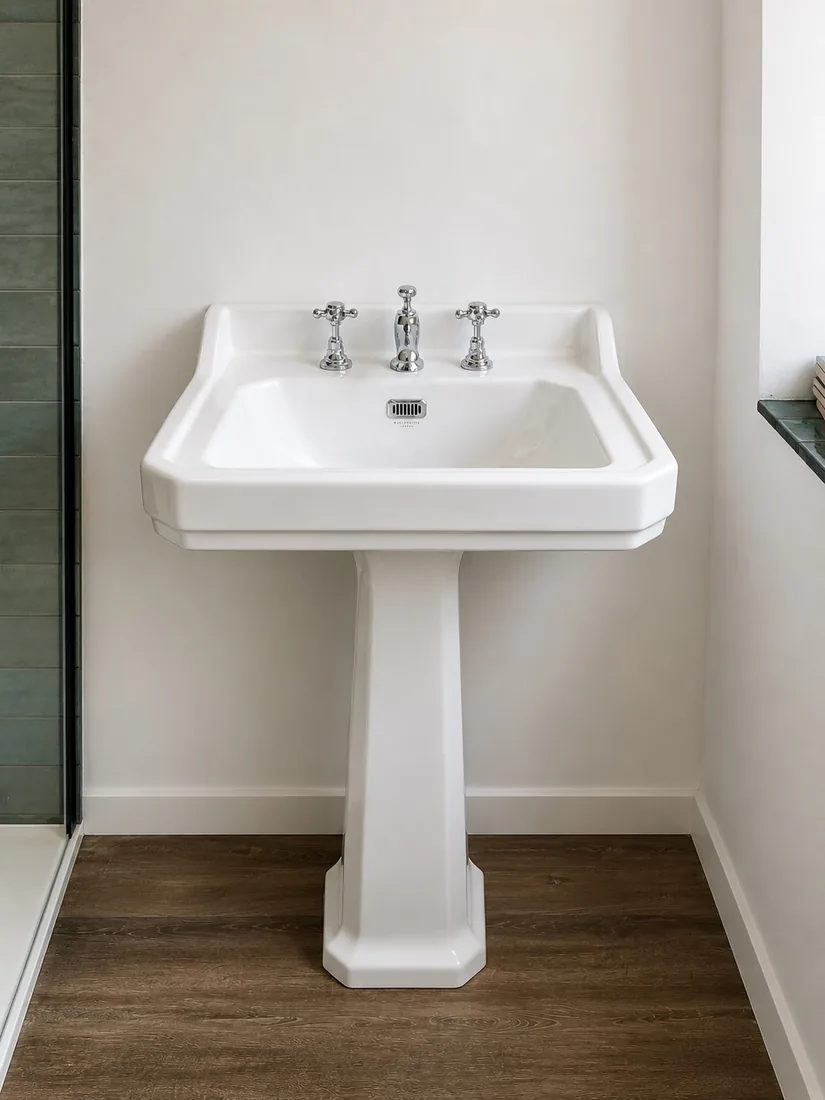
A compact washroom is unforgiving. Every millimetre is visible, every fitting sits close to the next, and a layout that is a few degrees off feels cramped rather than considered. The trick is not squeezing things in — it is choosing the right fittings and setting them out so the room breathes. Wall-hung pans and vanities free up floor and make the space read larger. A slim-projection basin, a pivot or sliding door, a recessed shelf instead of a protruding cabinet: small decisions that add up to a room you actually want to use.
This is a different discipline to a main bathroom. With an ensuite or a downstairs loo there is no room to hide a mistake, so the planning has to be exact before a single fitting is ordered. We measure properly, work out the door swing and the standing space first, then build the layout around how you move through the room. If it helps to picture it, our 3D concept generator shows how a finish might sit in the space.
Pans and vanities off the floor to open up the room and make cleaning simple.
Recessed niches, slim cabinets and mirror units sized to the wall, not bolted on as an afterthought.
Sliding, pivot or rehung doors so the entrance never fights the fittings.
The question we hear most is "but where would the plumbing go?" — and the honest answer is that it is usually more achievable than people expect. Hot and cold supply is easy to run. The real constraint is waste: a toilet needs a fall on the soil pipe to drain by gravity, and that dictates a lot about where a WC can sensibly sit.
Where a gravity connection to the existing soil stack is awkward — a loft conversion, an internal room with no nearby drain, a long horizontal run — a macerator or pumped system solves it. These pump waste through narrow-bore pipe to the nearest stack, which opens up locations that would otherwise be impossible. Modern units are quiet and dependable when they are specified correctly and the right WC and basin are connected to them; the failures people hear about almost always come from the wrong fittings or wipes and unsuitable items going down. We plan the soil routing first, decide gravity-versus-pumped on the facts of your property, and never start swinging hammers until we know the waste runs cleanly.
Most new ensuites come from borrowing space — a slice off the end of a bedroom, the dead area over a stairwell, an oversized landing or a built-in wardrobe run. The skill is taking that space without wrecking the room it came from. We work out the stud line, the door positions and the storage you lose, so the bedroom still feels like a bedroom and the new ensuite earns its keep. Done well, you barely notice the space has gone.
Small rooms work hardest — every centimetre has to earn its place.
An extra washroom is one of the few improvements that buyers actively look for. A master bedroom with its own ensuite, or a downstairs cloakroom in a family home, changes how a property lives and how it shows. In the period terraces around Worthing and the Victorian streets of Hove, a tucked-in downstairs WC removes the trek upstairs and adds a genuine selling point. The value is real — provided the room is judged well rather than crammed in.
That is the line we hold: a small room finished to the same standard as a large one. The same porcelain, the same natural stone, the same flush detailing and crisp grout lines you would expect from a full bathroom installation — just at a smaller scale. A compact room cannot rely on size to impress, so the finish has to carry it. Our approach to tiling and stonework is the same whether the room is three metres square or one: set out from a centre line, plan the cuts, and finish the edges properly.
Premium porcelain, stone and brassware specified to a smaller footprint without cutting corners.
Centred layouts and clean cuts so a small room never looks like an afterthought.
An extra washroom that genuinely improves how the home lives and sells.
We plan and fit ensuites and cloakrooms across Worthing, Shoreham-by-Sea, Lancing and the wider Adur and West Sussex coast, plus Hove and Brighton. The local housing stock — coastal flats, semis with tight footprints, period homes with awkward corners — throws up exactly the kind of small-space puzzles this service is built for. If your project is a larger reconfiguration or a properly engineered shower, our wet rooms and walk-in showers and bathroom renovation pages cover that ground. Otherwise, tell us the space you have in mind and we will tell you honestly what will fit.
Usually, yes. Water supply is straightforward to run; the deciding factor is waste. Where a gravity soil connection is awkward, a macerator or pumped system lets a WC sit somewhere a traditional drain run could not reach. We assess the waste routing first and tell you plainly what is and isn't possible in your property.
Only when a gravity fall to the soil stack isn't practical. When that is the case, modern macerators are quiet and dependable — provided the right WC and basin are connected and nothing unsuitable goes down them. Most problems come from poor specification or misuse, both of which we plan out from the start.
A cloakroom with a WC and small basin can work in a remarkably tight footprint, and a usable shower ensuite in a little more. Rather than quote a magic number, we measure the standing space, the door swing and the fittings together — that is what decides whether a room feels usable or cramped.
An extra washroom is one of the improvements buyers genuinely look for, especially a master ensuite or a downstairs cloakroom in a family home. The value depends on it being well judged and properly finished — a cramped, compromised room can do the opposite, which is why the planning matters.
Very often that is exactly where the space comes from — a slice off a bedroom, a landing, or a built-in wardrobe run. The skill is borrowing it without spoiling the room next door, so we work out the new wall line, door positions and lost storage before committing.
Adding a new bathroom or WC typically engages building regulations for drainage, ventilation and electrics, and sometimes structural work where walls move. It is rarely a barrier, just something to handle correctly — we plan the work to meet the relevant requirements from the outset. For specifics on your project, get in touch.
We open for bookings in June 2027 — register your interest now, and founding clients get first pick of the calendar.
