Curing & drying
Tanking, adhesive and grout cure on the materials' clock, not ours. This time is built into a proper programme and can't be safely rushed.
Every bathroom is different, so the honest answer is "it depends" — but it depends on things we can explain. Here is a realistic look at the stages, the durations you can expect by scope, what tends to add time, and how a single accountable team keeps the job tight and the disruption down.
The single most useful thing to understand about a bathroom timeline is that the calendar is driven by the scope, not just the size of the room. A light cosmetic refresh and a full strip-out and rebuild are two very different jobs, and they sit a long way apart on the schedule even in an identical room.
As a rough guide, a cosmetic refresh that keeps the layout — new tiling, a shower, brassware, a screen and lighting over sound plumbing — often takes around one to two weeks. A full strip-out and rebuild, where the room comes back to a shell and everything is renewed, is more commonly two to four weeks of working time. These are typical ranges and genuinely depend on the job; we give a room-specific timeline alongside the fixed quote at survey rather than a one-size-fits-all promise. If you want to weigh up scope first, our full bathroom installation and bathroom renovation pages explain the difference in detail.
A full installation moves through a clear sequence of phases. Each one has to be done in order and, importantly, some can't be rushed because they wait on materials curing rather than on the team. Here is how a typical rebuild unfolds.
A cosmetic refresh skips or shortens the heavier early stages — there's far less strip-out and first-fix — which is exactly why it lands at the quicker end of the range.
A realistic timeline beats an optimistic one every time — we'd rather tell you the truth at survey than chase a date we can't keep.
When a bathroom takes longer than expected, it is almost always one of a handful of reasons — and most of them can be anticipated and planned for. Knowing them in advance is the difference between a tight schedule and a job that drifts.
Tanking, adhesive and grout cure on the materials' clock, not ours. This time is built into a proper programme and can't be safely rushed.
Special-order tiles, stone, brassware and bespoke items can carry long lead times. We get key items on site before starting so the job isn't waiting on a van.
Older coastal homes can hide old pipework, failed waterproofing, rotten timber or out-of-true walls. Putting these right properly adds time — but it's never tiled over.
Changing your mind once work is under way — a different tile, a moved fitting, an added niche — is your call, and sometimes the right call. But it can mean re-ordering, re-sequencing or re-doing finished work, which adds days. Settling the spec properly before we start is the single best way to protect the timeline, and our 3D concept generator can help you picture the finished room before anything is committed.
A bathroom slows down most when trades are juggled between different firms — the tiler waiting on the plumber, the electrician booked for a window that's slipped, nobody owning the gaps. We run our installations with one accountable in-house team from strip-out to snagging, so the phases hand over cleanly and the curing windows are planned around rather than discovered late.
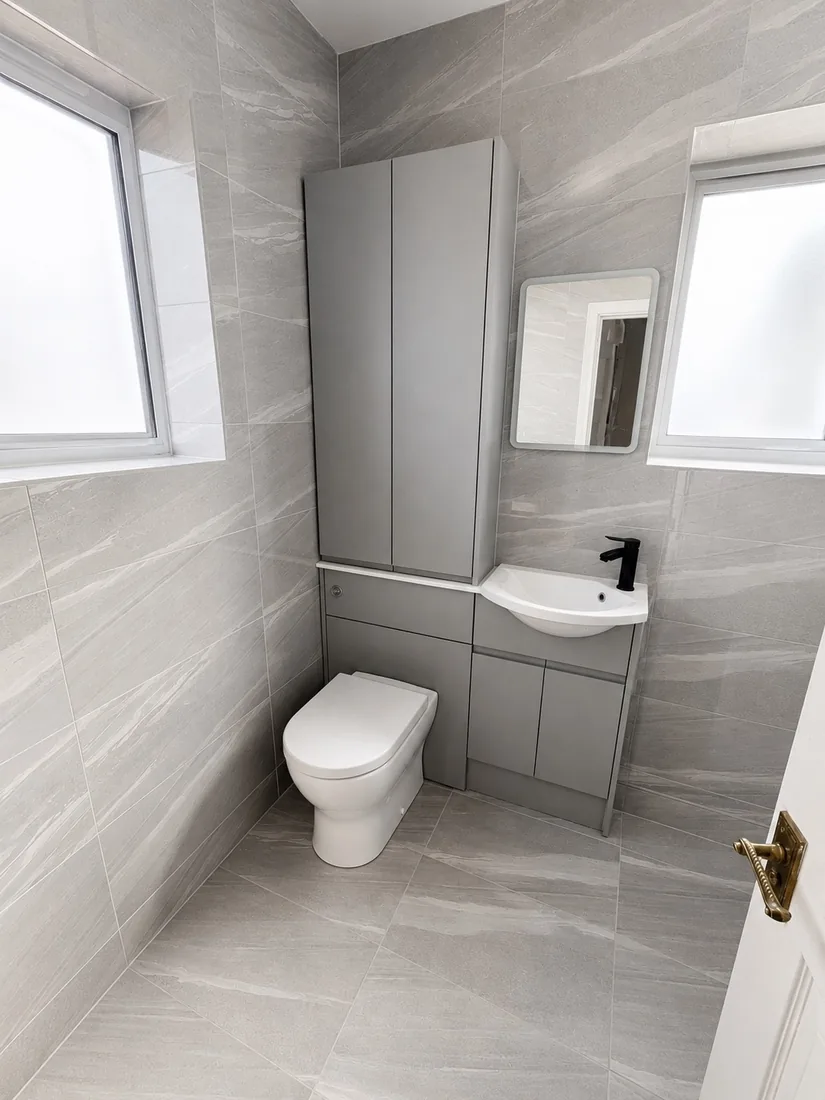
That continuity is what lets us commit to a realistic timeline and hold it. The sequence is set out at survey, key materials are ordered ahead, and the day-to-day is coordinated by people who know the whole job — not a rota of subcontractors meeting for the first time on your landing. It's the same discipline whether it's a compact ensuite or cloakroom or a full family bathroom.
A bathroom installation is intrusive by nature, but it doesn't have to take over the house. We dust-sheet and protect routes through the home, keep the work area contained, clear up at the end of each day and keep noisy work to sensible hours. The aim is a job that's tidy to live alongside, not a building site you have to escape.
The bigger question is the bathroom itself. For most of a full installation the room is out of use, so if it's your only bathroom we'll talk that through honestly before we start and agree how to manage the gap — sequencing the work, or arranging a temporary arrangement where it helps. Homes with a second bathroom or cloakroom absorb it far more easily. Either way, you'll know the realistic timeline up front so you can plan around it. When you're ready, you can register your interest and we'll set out exactly what to expect for your room.
We plan and fit bathrooms throughout Worthing and the wider coast, and the timeline conversation is part of every survey. A quick read on your area:
For the wider picture — choosing a layout, budgeting and sequencing the whole project — see our bathroom cost guide for West Sussex and the planning advice in our bathroom renovation planning guide.
As a guide, a cosmetic refresh that keeps the layout often takes around one to two weeks, while a full strip-out and rebuild is more commonly two to four weeks of working time. The honest answer is that it depends on the job — room size, the spec, the condition of what's behind the walls and the lead times on chosen items all move the figure. We give a realistic, room-specific timeline alongside the fixed quote at survey, rather than a one-size-fits-all promise.
For most of a full installation, no — once the room is stripped out the suite is gone and the services are open, so it cannot be used. If it's the only bathroom in the house we'll talk through the gap before we start and agree how to manage it, for example sequencing the work or arranging a temporary toilet. In homes with a second bathroom or cloakroom the disruption is much easier to absorb. We always make the realistic timeline clear up front so you can plan around it.
The common causes are waiting on materials and special-order items, hidden problems uncovered once the room is opened up — old or undersized pipework, failed waterproofing, rotten timber, uneven walls — and changes to the spec once work is under way. Curing and drying times for tanking and tile adhesive are also fixed by the materials, not the team. We reduce the surprises by surveying thoroughly and getting key items on site before we begin.
Waterproofing — tanking the wet areas and sealing the substrate — has to cure properly before anything goes on top of it. Tile adhesive and grout need their own curing time too. These aren't delays we can speed up by working harder; rushing them is exactly how leaks and failed tiling happen later. Building this drying time into the programme is part of doing the job properly, and it's why a well-built bathroom is worth the wait.
Our standard working days are weekdays, which keeps the schedule predictable and lets us coordinate the trades cleanly through the week. We plan the programme around that rhythm rather than relying on weekend working to hit a date. If timing is tight for your project, raise it at survey and we'll be straight with you about what's realistic.
More honest, practical reading on planning and budgeting your project:
We open for bookings in June 2027 — join the 2027 list now, and founding clients get first pick of the calendar and a realistic timeline at survey.